Classical Music Radio: A Guide to Periods and Composers
October 18, 2026 · Updated November 02, 2026
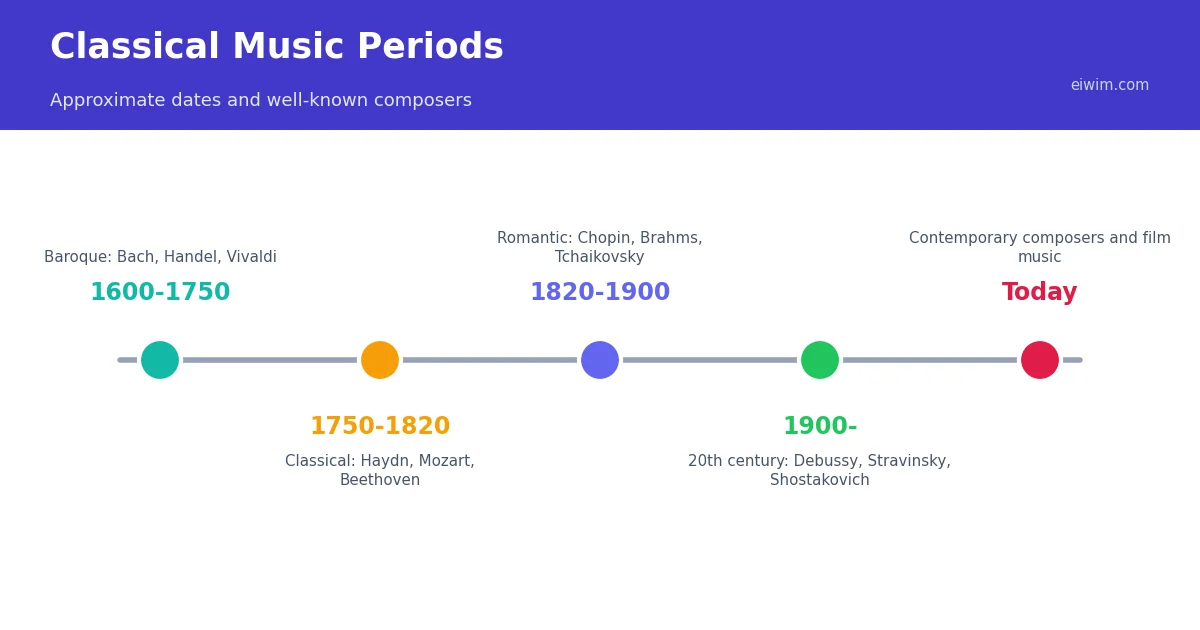
Classical radio can seem intimidating because the repertoire is huge. A simple map of the main periods makes it much easier to follow, and to choose a station that matches your mood.
Baroque (about 1600 to 1750)
Baroque music is ornate and rhythmic, often built around a steady bass line and intricate counterpoint. Johann Sebastian Bach, George Frideric Handel and Antonio Vivaldi are the best-known names. Listeners often find Baroque music orderly and energetic, which is why it is popular as background music.
Classical (about 1750 to 1820)
The Classical period favours clarity, balance and elegant melody. Joseph Haydn helped shape the symphony and string quartet, Wolfgang Amadeus Mozart wrote in almost every form, and Ludwig van Beethoven (1770 to 1827) bridged the Classical and Romantic worlds with increasingly dramatic works.
Romantic (about 1820 to 1900)
Romantic composers emphasised emotion, storytelling and personal expression. Frédéric Chopin wrote masterpieces for solo piano, Johannes Brahms combined classical structure with warm harmony, and Pyotr Ilyich Tchaikovsky is known for his ballets and symphonies. Orchestras grew larger and music became more dramatic.
The twentieth century and beyond
The 1900s brought a wide range of approaches. Claude Debussy explored colour and atmosphere, Igor Stravinsky shocked audiences with rhythmic power, and Dmitri Shostakovich wrote symphonies and quartets under demanding political circumstances. Later composers included minimalism and electronic experiments, and film music is a major presence in orchestral writing today.
Types of classical radio programming
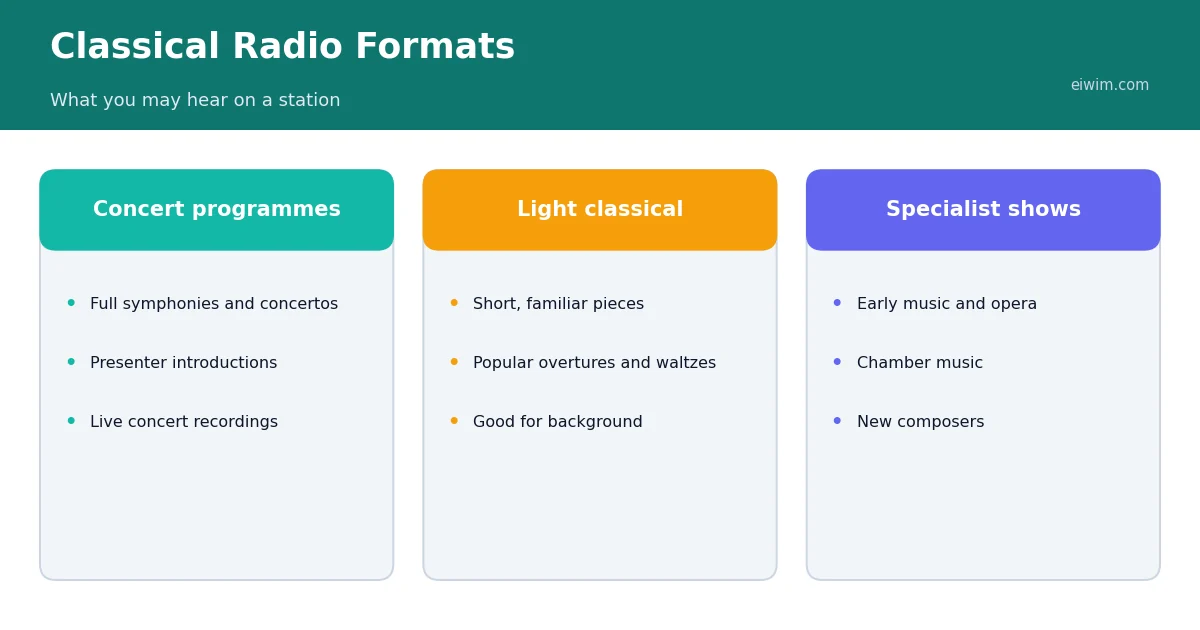
- Full-length concerts: complete symphonies and concertos, often with presenter notes.
- Light classical: short, melodic favourites that work well as background.
- Specialist programmes: early music, opera, chamber music, new composers.
Tips for new listeners
- Start with a station that plays shorter pieces and names each one. The title and composer on screen let you look up favourites.
- Pick a period you enjoyed and look for composers from it.
- Do not worry about finishing long works in one go. Listen to a movement at a time.
- Try a different conductor or orchestra of a piece you like. Interpretations differ.
Where to find stations
Explore the Classical stations, and look at related genres such as Instrumental and Film & Musical. Many European public broadcasters in Germany and France broadcast classical programmes. Classical music is also popular for focus, as we explain in our focus and study guide.
The instruments of the orchestra
An orchestra is divided into four families. The strings, which include violins, violas, cellos and double basses, form the core of the sound. The woodwinds, such as flutes, oboes, clarinets and bassoons, add colour and melody. The brass, including horns, trumpets, trombones and tuba, provide power and fanfare. The percussion, from timpani to cymbals, adds rhythm and drama. Knowing the families helps you follow a piece, because composers often pass a theme from one group to another. If a presenter describes a work as having a prominent oboe solo or a brass chorale, you will know what to listen for.
Opera, choral music and chamber music
Classical radio is not only about symphonies. Opera combines singing, orchestra and drama, and many stations broadcast complete performances from opera houses. Choral works, such as Handel's Messiah, first performed in 1742, bring together choirs and soloists, often with religious themes. Chamber music, played by small groups such as string quartets, has an intimate feel and is easier for beginners to follow, since you can hear each instrument clearly. Solo piano and organ music also make up a large part of the repertoire. When you explore, try one example of each to find which you enjoy most.
Reading a programme
Classical pieces have long and sometimes confusing titles, but they follow a pattern. A title often includes the form, the key and a number, as in "Symphony No. 5 in C minor". The "opus" number, abbreviated Op., is a catalogue number assigned by the composer or a publisher. Movements, the sections within a larger work, are usually marked with tempo words in Italian, such as allegro (fast), adagio (slow) and presto (very fast). Once you know this, a presenter's announcement becomes much easier to follow, and you can write down titles you like to search for later.
A three-week listening plan
To build confidence, spend one week on each of three styles. In the first, listen to short, popular pieces on a light classical programme, such as overtures and dances. In the second, choose a piano or chamber music programme and notice how each instrument is heard. In the third, listen to a symphony from start to finish on a concert programme, using the movements as stepping stones. Keep a notebook of anything you enjoy, and you will quickly build a personal list of favourites. For background listening during work, our guide to genres for studying and focus explains how classical fits in.
Classical radio around the world
Almost every country has stations devoted to classical music, and many public broadcasters run at least one. Listening to stations from different countries lets you hear regional repertoire, from German romantic works to French impressionism and Russian symphonies. You can find them in the Classical category, and you can narrow your choice by browsing the countries page. Related categories include Instrumental and Film & Musical, which are good if you like orchestral sounds but prefer a more modern setting.
Live concerts and festivals on air
Many classical stations broadcast live concerts, which have a different feel from studio recordings. You can hear the audience, the room and small imperfections that make a performance feel alive. Festivals such as summer concert series and opera seasons are often carried by public broadcasters, and some stations schedule them at set times each week. If you enjoy a live broadcast, note the orchestra, conductor and soloists, because the same works are performed in many interpretations, and comparing them is one of the great pleasures of classical music. Presenters often explain what to listen for before the performance begins, which is helpful if the piece is unfamiliar.
Quick answers
Which composer should I start with?
Many people start with Mozart or Beethoven for the Classical period and Tchaikovsky or Chopin for the Romantic.
Is Baroque music good for background listening?
Many listeners find its steady rhythm and clear structure pleasant in the background.
Do I need to know the music to enjoy it?
No. Start with short, melodic pieces and let stations with presenter notes guide you.