
Country Music Radio: Subgenres from Honky-Tonk to Modern Country
October 29, 2026 · Updated November 02, 2026
Country music and radio grew up together. In the United States, early country performers reached listeners through radio barn dances, and the genre's identity is still tied to local stations. Today "country" ranges from traditional string-band music to stadium-sized pop. Here is a guide to the main styles.
Roots and early radio
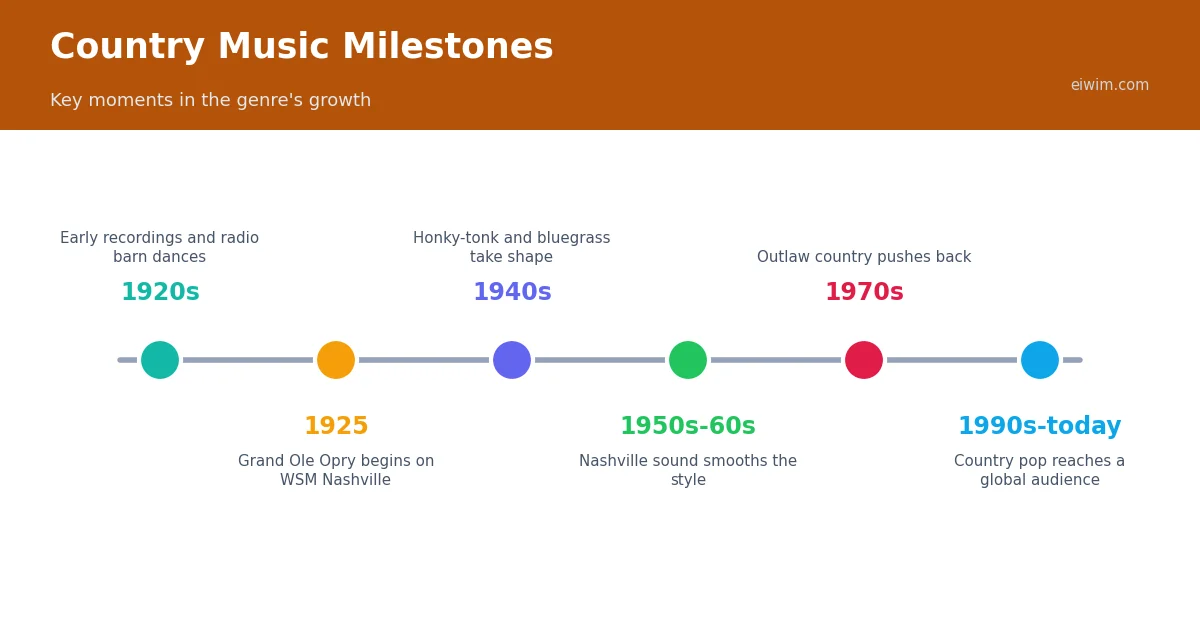
Country music draws on Appalachian folk songs, Celtic and English ballads, gospel and the blues. The Bristol recording sessions in 1927 are often cited as a key moment in its commercial beginnings. On radio, the Grand Ole Opry began as a barn dance programme on station WSM in Nashville in 1925 and became one of the longest-running radio shows in the United States.
Honky-tonk and bluegrass
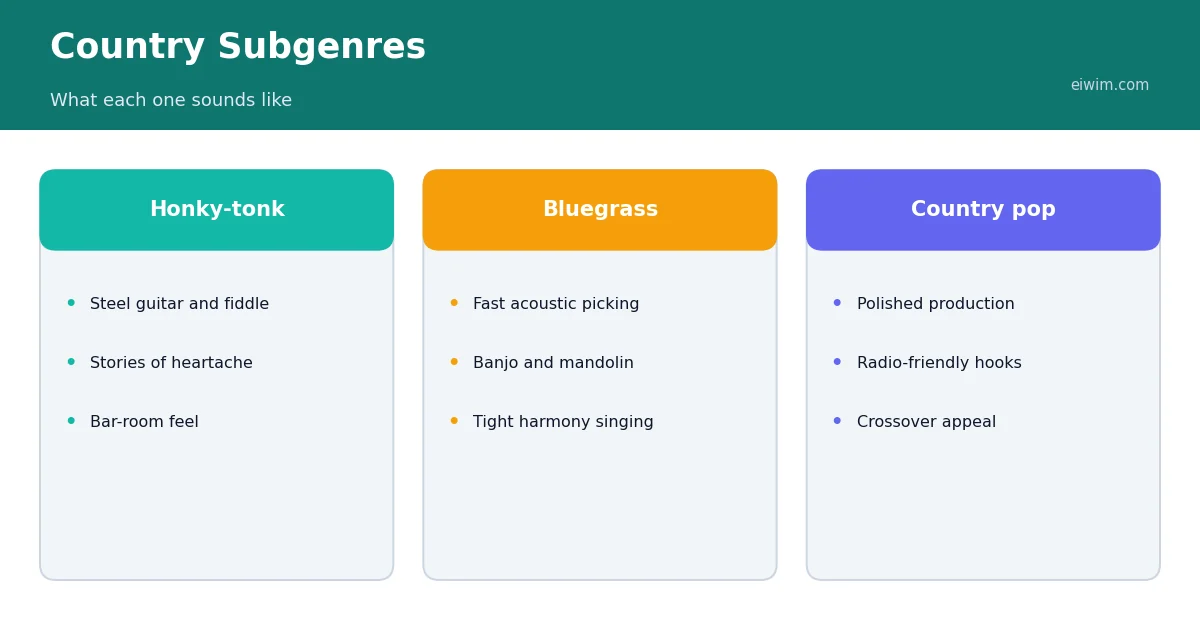
In the 1940s two distinct traditions took shape. Honky-tonk, associated with Hank Williams, is built around steel guitar, fiddle and emotional songs about heartbreak and drinking. Bluegrass, developed by Bill Monroe and his band, is acoustic and fast, with banjo, mandolin and close harmony vocals.
The Nashville sound
In the late 1950s and 1960s producers in Nashville smoothed out the rough edges with strings, backing vocals and polished arrangements. This "Nashville sound" helped country reach pop audiences.
Outlaw country
In the 1970s artists such as Willie Nelson and Waylon Jennings pushed back against studio control, favouring a rawer, more personal style. The "outlaw" label stuck, and its influence runs through later alt-country and Americana.
Modern country and country pop
From the 1990s, country became a major force in mainstream pop. Contemporary country radio often features polished production, rock and pop influences and big choruses, while traditional artists continue to work alongside it.
How to find your style
- Mainstream and modern: browse the main Country category, where much of the airplay is current.
- Roots and acoustic: see Folk and Traditional stations.
- Related sounds: country's cousins include Blues, Gospel and Classic Rock.
Where it is popular
Most country stations are in North America, with the largest group in the USA and a sizeable number in Canada. Station call signs there often follow specific conventions, which we explain in our call sign guide. For other genres born in American roots music, our rock radio guide is the natural next step.
The Grand Ole Opry and radio's role
Radio and country music grew up together. In 1925, the station WSM in Nashville began broadcasting a weekly show of live country music, which was soon renamed the Grand Ole Opry. It reached listeners across the American South and Midwest, and it made Nashville a centre of the industry. The broadcast showed that radio could bring regional music to a national audience and helped to turn local players into stars. The Opry is still broadcast today. If you listen to country radio, you are taking part in a tradition that is nearly a century old.
Storytelling and songwriting
Country is a songwriter's genre. Many songs follow a clear narrative with a beginning, middle and end, and the lyrics usually focus on everyday experiences: family, work, small towns, romance and loss. A common feature is the twist or the memorable title line that comes back at the end of each verse. This makes country easy to follow, which is one reason it is popular with people learning English. If you want to understand a song fully, try reading the lyrics after you hear it, and notice how a few lines can tell a complete story.
Country music around the world
Although country began in the United States, it has a global audience. Canada has a large country scene, and British, Irish and Australian artists have developed their own versions. In Germany, Poland, Scandinavia and the Netherlands, local acts perform country in English or their own languages, and there are festivals and fan clubs across Europe. Browse stations from the USA, Canada and Germany to compare how each place interprets the genre.
Types of country station
- Current country stations play chart hits and new releases, often with a polished, pop-influenced sound.
- Classic country stations focus on older songs from the 1950s to the 1990s.
- Bluegrass and old-time stations feature acoustic string bands.
- Americana stations mix country, folk, blues and rock with a roots feel.
- Country gospel stations combine country instruments with religious lyrics. Our guide to gospel and Christian radio explains that tradition.
Tips for listening
If you are new to country, begin with a station that plays a mix of recent and classic songs, so you can compare. Listen for the instruments: acoustic guitar, steel guitar, fiddle and banjo. Notice how the singers tell stories and use plain language. Try Country, Folk and Classic Rock stations side by side to hear how these styles overlap, and read about their common roots in our guide to folk and traditional music.
A starter listening plan
To get a quick overview, listen to a short stretch of each style. Begin with an hour of classic country to hear the storytelling and the steel guitar. Then try a bluegrass hour for the banjo and fiddle. Next, listen to an hour of current country to compare production and themes. Finally, sample an Americana or outlaw country programme for the rougher, more independent edge. As you listen, note which instruments and voices you prefer. You will probably find that you enjoy one or two of these more than the others, and that gives you a good starting point for choosing a regular station.
Country and other genres
Country overlaps with many other styles. Country rock blends it with Rock, country pop mixes it with Pop, and Southern gospel connects it with Gospel. Its link with Folk and Blues is especially strong, because all three grew from similar communities in the American South. If you like one of them, the others are natural places to explore next. You can see the full list on the genres page.
Quick answers
What is the Grand Ole Opry?
A long-running country music radio show that began on WSM in Nashville in 1925.
What is the difference between bluegrass and country?
Bluegrass is a specific acoustic style with banjo and mandolin. Country is the broader family.
Is modern country just pop?
Some of it is pop-influenced, but traditional and roots styles continue alongside it.