
Reggae, Ska, Dub and Dancehall Explained
October 20, 2026 · Updated November 01, 2026
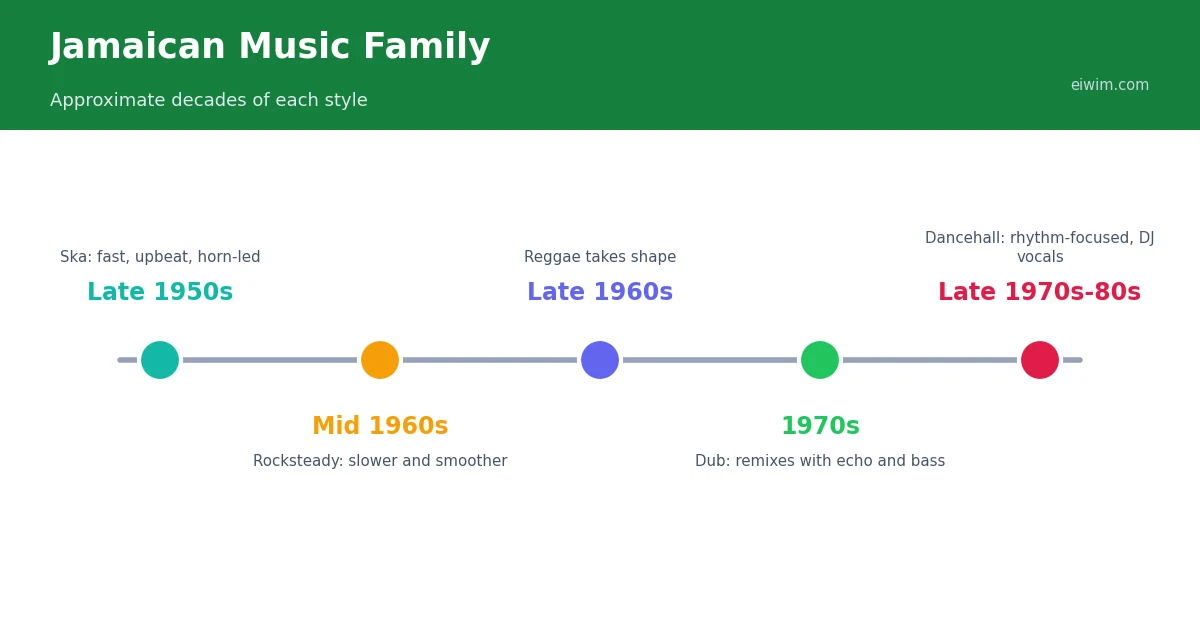
Reggae is known worldwide, but it sits at the centre of a family of Jamaican styles that developed one after another. Hearing the differences makes radio listening richer, and it explains why a "reggae" station may play several of them.
Ska (late 1950s)
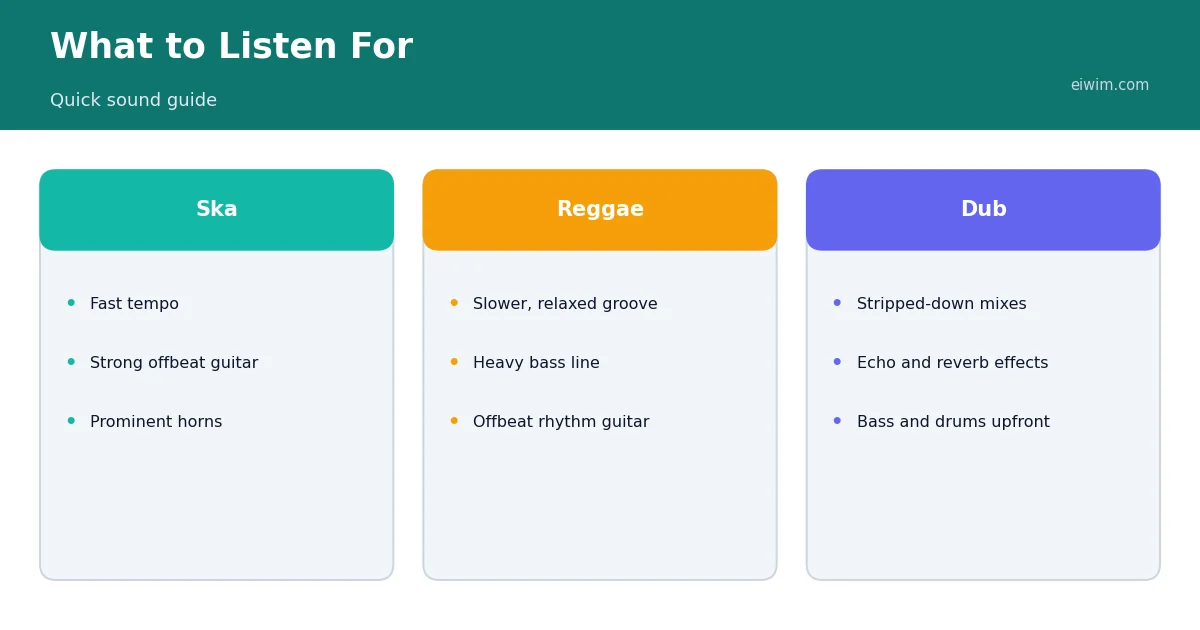
Ska grew in Jamaica in the late 1950s, mixing local mento and calypso with American rhythm and blues. It is fast and upbeat, with an emphasis on the offbeat, walking bass lines and bright horn sections. Later waves of ska in the UK and the US brought punk influences. You can find it under Ska.
Rocksteady (mid-1960s)
As the dance floor slowed down in the mid-1960s, rocksteady replaced ska for a time. It has a slower beat, a more prominent bass line and emphasis on vocal harmonies. It is often seen as the bridge between ska and reggae.
Reggae (late 1960s onward)
Reggae took shape in the late 1960s. It is relaxed, with a heavy bass line, drums that often emphasise the third beat, and rhythm guitar playing on the offbeat. Lyrics frequently deal with social issues, love and spirituality. Reggae is closely associated with Bob Marley, and UNESCO added reggae music of Jamaica to its list of intangible cultural heritage in 2018. Browse the Reggae stations for classic and modern recordings.
Dub (1970s)
Dub emerged in the early 1970s when producers such as King Tubby and Lee "Scratch" Perry began remixing reggae tracks, removing vocals and emphasising bass and drums, then adding echo and reverb. It was an early example of the studio as an instrument, and it influenced later electronic music. Try Dub.
Dancehall (late 1970s and 1980s)
Dancehall developed from reggae in the late 1970s and 1980s. Its rhythms were sparer and, over time, more electronic, with DJs chanting or singing over "riddims". Dancehall remains hugely influential in pop and hip hop today. Listen to Dancehall.
Beyond Jamaica
Reggae has been adopted around the world. Latin America has its own reggae scenes, and reggaeton, which developed in Puerto Rico and Panama, shares the dancehall heritage. You can also hear it on stations in Europe, particularly France and Germany. See our guide to Latin music styles for the connection.
Finding the right station
- For relaxed listening, start with general reggae and roots stations.
- For high energy, choose ska or dancehall.
- For atmospheric, bass-heavy sets, try dub.
Explore the rest of the genres page to find more stations built around Caribbean sounds, including Zouk and Tropical.
Instruments and the sound system
Reggae has a distinctive instrumental sound. The bass is melodic and prominent, and it often carries the main hook. The drums play a pattern in which the emphasis falls on the third beat of the bar, a feel often called "one drop". The guitar or keyboard plays short, choppy chords on the offbeat, a technique sometimes called the skank. Horns, percussion and backing vocals add colour. Much of this sound was shaped by "sound system" culture in Jamaica, where DJs and engineers built large mobile speaker setups to play records at street parties. Sound system operators competed to have the best exclusive records and the biggest bass, which pushed producers to develop new sounds, including dub.
Message and themes
Many reggae songs deal with identity, community, injustice and spiritual belief. The Rastafari movement, which grew in Jamaica in the 1930s, strongly influenced the lyrics and imagery of many artists. Other songs are about love, dancing and everyday life, so the genre covers both serious and joyful ground. Bob Marley is the artist most associated with reggae worldwide, and his songs helped bring Jamaican music to a global audience in the 1970s. If you listen to reggae, you will notice that it often combines a relaxed groove with a strong message.
Reggae in the UK, Europe and Africa
Jamaican migrants brought reggae to the United Kingdom, where it became a core part of Black British culture and influenced punk and later styles. In the late 1970s, the "2 Tone" movement combined ska and punk, and British acts developed their own reggae sound. In Europe, strong scenes grew in France, Germany, Italy and elsewhere. In Africa, artists from countries such as Côte d'Ivoire and South Africa developed local reggae styles, often singing in local languages. This international spread means a reggae playlist can include very different voices and accents, which you can explore by browsing stations by country.
Connections with other genres
Reggae has influenced many other styles. Hip hop grew from Jamaican-influenced block parties in New York, as described in our post on hip hop radio. Dub's use of echo and remixing prefigured modern electronic production, and dancehall rhythms underpin parts of Reggaeton. Even pop and rock have borrowed reggae rhythms. If you like reggae, you may enjoy exploring these relatives as well, along with Ska, Dub and Dancehall stations.
Tips for enjoying reggae radio
- Listen to the bass first. It is the key to the sound, and good speakers or headphones make a big difference.
- Notice the offbeat guitar or keyboard, which gives the music its bounce.
- Try roots reggae for message-driven music, lovers rock for romance and dancehall for modern energy.
- Look for stations that run specialist shows, where presenters explain the history of the records they play.
A starter reggae listening list
If you want names to look for, begin with a few influential artists across the styles. For ska, listen for the Skatalites, a group central to the early sound. For rocksteady and early reggae, look for singers such as Alton Ellis and Toots and the Maytals. For roots reggae, Bob Marley and the Wailers, Burning Spear and Peter Tosh are essential. For dub, King Tubby and Lee "Scratch" Perry are famous producers whose studio techniques shaped the style. For dancehall, Yellowman and Shabba Ranks were major figures, and the style has continued to evolve through many newer artists. A presenter on a specialist show will often mention such names, so keep a pen ready.
Quick answers
Is reggae the same as ska?
No. Ska is faster and older. Reggae is slower, with a heavier bass line.
What is dub?
A style, usually based on reggae tracks, where producers strip vocals and add echo and reverb.
Is reggaeton the same as reggae?
No, but they are related. Reggaeton developed in Puerto Rico and Panama and draws on dancehall.