Hip Hop Radio: A Guide to the History and Subgenres
October 03, 2026 · Updated November 02, 2026
Hip hop is more than a style of music. It began as a cultural movement and it has grown into one of the most influential forces in popular music around the world. If you listen to a hip hop station today, you will hear several generations of the style side by side, from old-school party records to the latest streaming hits. This guide explains where the music came from, how it changed and how to find the kind you like.
Where hip hop began
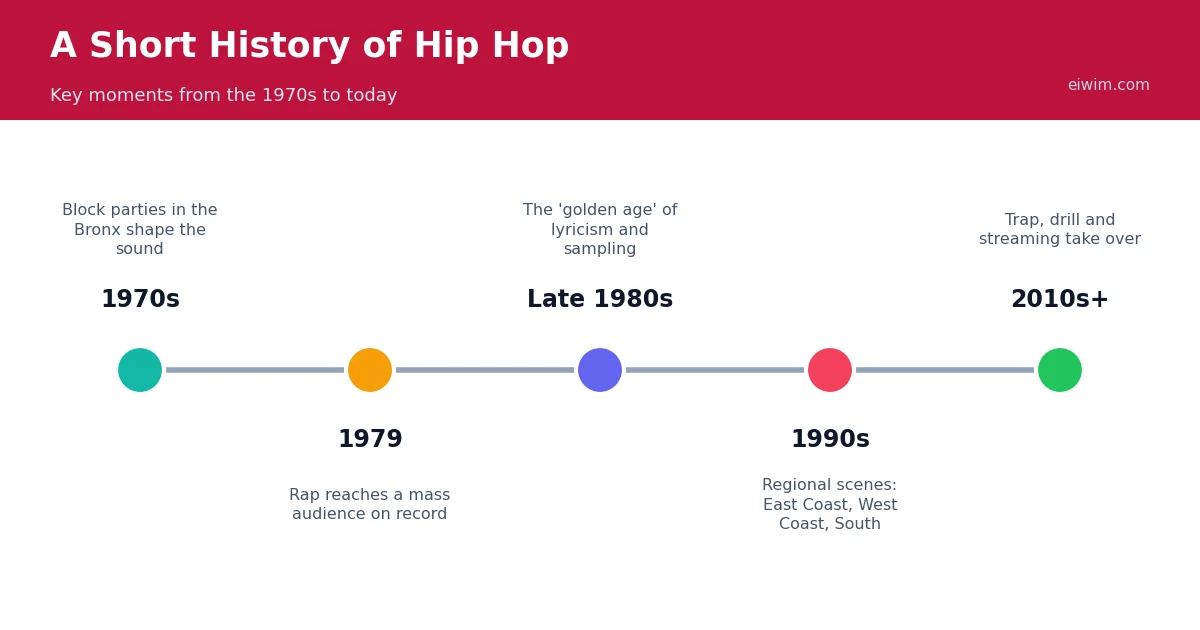
Hip hop emerged in the Bronx, New York, in the 1970s. Block parties were the starting point. DJs played the instrumental sections of funk and soul records, often called "breaks", and extended them by switching between two copies of the same record. A party that DJ Kool Herc played in 1973 is often cited as an early landmark, though many people helped shape the scene at the time. MCs soon joined the DJs, first to hype the crowd and then to rhyme over the beats.
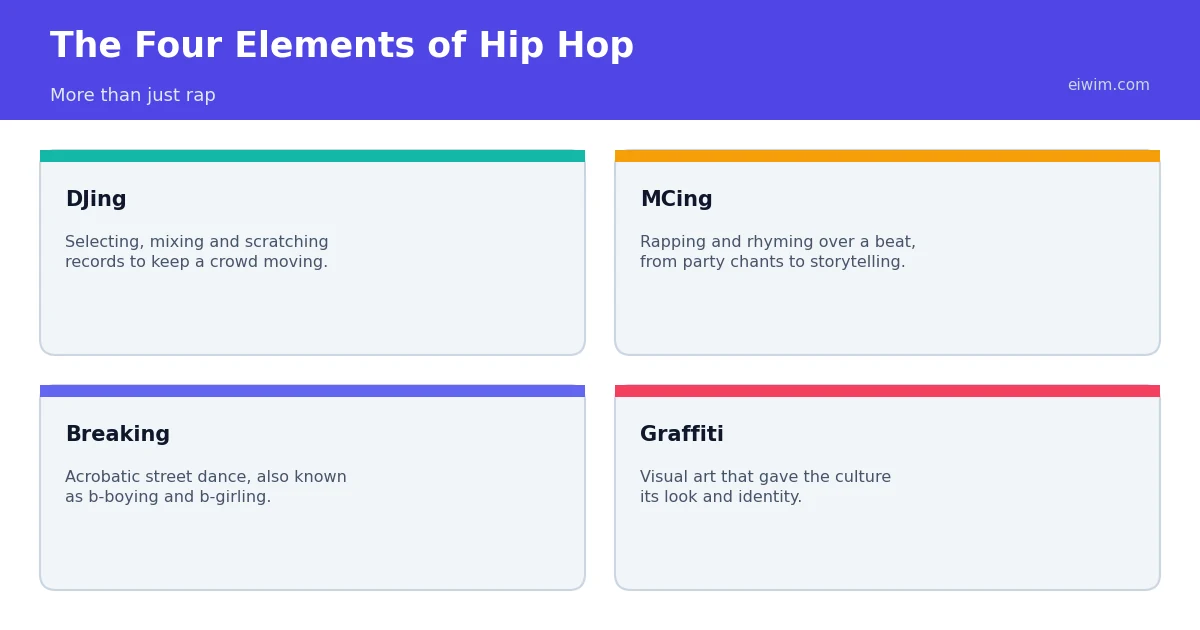
The culture developed around four elements: DJing, MCing (rapping), breaking and graffiti. Radio stations later focused mostly on the music, but the dance and visual art were part of the same community from the beginning.
From the street to the record shop
For several years hip hop lived mainly at parties and on cassette tapes. In 1979 a rap single reached a wide audience, and "Rapper's Delight" by the Sugarhill Gang is the record most often named as the first rap hit. During the 1980s, artists such as Run-DMC brought rap to larger audiences, and drum machines became central. The Roland TR-808, released in 1980, gave many records their deep, booming bass drum, a sound that is still used today.
The golden age
The late 1980s and early 1990s are widely called the golden age of hip hop. Producers built dense collages from samples of older funk, soul and jazz records, and MCs focused on intricate rhymes, humour and social commentary. Groups from New York produced a wide range of sounds, from political and confrontational to playful and jazzy. If you want to hear this era, try the Oldies and HipHop stations and look for programmes that mention "old school" or "90s".
Regional scenes
As hip hop spread across the United States, regional styles appeared:
- East Coast. Known for complex lyricism and gritty, sample-based beats.
- West Coast. In the early 1990s, a smoother, synthesizer-led style known as G-funk became popular.
- The South. From the late 1990s and 2000s, cities such as Atlanta and Houston developed their own sounds, with heavy bass, slower tempos and distinctive slang.
Hip hop also spread internationally. Today you can find scenes in France, Germany, the UK, Brazil, Japan, India and many other places, usually rapping in the local language. You can browse the Rap category and the countries page to find stations that play local artists.
Trap, drill and the streaming era
Two modern styles are worth knowing. Trap grew out of the American South in the 2000s. It is built on fast hi-hats, deep 808 bass and sparse, atmospheric melodies, and it has become one of the dominant sounds in popular music. Drill began in Chicago in the early 2010s and later developed UK and other versions, with darker tones and a distinctive rhythmic pattern. Streaming services and social media have made it much easier for artists to reach listeners without a record label, so new styles can spread within months.
How to listen to hip hop radio
On Eiwim, a good starting point is the HipHop category. Related categories include Rap, Urban and R'n'B. Here are some tips:
- Know what you want. Stations labelled "old school" play the 1980s and 1990s, while "hits" or "urban" stations focus on current music.
- Try mixshows. Many stations run DJ mixes, which blend tracks continuously and are a good way to discover artists.
- Check the language. Hip hop stations around the world rap in many languages. Browse stations by language to hear it in Spanish, French, German and more.
- Mind the lyrics. Many tracks contain explicit language. If you listen around children or at work, look for stations that mention clean or radio edits.
The connection to other genres
Hip hop has constantly borrowed from other styles. Early producers sampled funk, soul and disco, so if you enjoy those you may like the roots of hip hop too. Try Funk, Soul and Disco stations. Reggae and dancehall also helped shape early hip hop, because the sound system culture of Jamaica was an important influence on the Bronx scene. Our guide to reggae, ska, dub and dancehall explains that connection.
Why hip hop works so well on radio
Hip hop is driven by personality as much as by songs. Radio hosts, DJs and guest MCs add commentary, interviews and live freestyle sessions, and these formats work best when they are live. That is one reason many hip hop listeners still tune in to radio rather than only using playlists. If you are new to the genre, a live station gives you a guided tour without any effort.
A simple listening path
If you are new to hip hop, you do not have to start at the beginning or learn every name. A relaxed way to explore is to move through three stages. First, listen to a general HipHop station for an hour and notice which beats and voices stand out. Second, switch to an old-school or 90s station and listen for the samples, which often come from funk and soul songs you may already know. Third, try a station from another country, because hearing hip hop in a different language is a good way to notice rhythm and flow without getting stuck on the words. Keep a short note of any artist or producer whose sound you like, since that is the easiest way to find similar music later.
Hip hop and language
Hip hop is also a rich source of slang and wordplay. Many lyrics use double meanings, references to local places and rapid rhythm, which can be difficult for learners of a language. At the same time, the repetition of hooks and the strong rhythm make phrases easier to remember. If you are practising a language, choose a station with clearer, slower delivery first and move to faster styles as your listening improves.
Frequently asked questions
Who started hip hop?
No single person started it. It grew out of the Bronx community in the 1970s through DJs, MCs, dancers and artists. DJ Kool Herc is often credited as an early pioneer.
What is the difference between rap and hip hop?
Hip hop is the wider culture, including music, dance and visual art. Rap is the vocal style within the music, in which a performer speaks or chants rhymes over a beat.
What is sampling?
Sampling means taking a piece of an existing recording and reusing it in a new track. It was central to hip hop production from the 1980s onward.
Is hip hop only in English?
No. There are large scenes in many languages, including Spanish, French, German, Portuguese, Japanese and Hindi, among others.
To keep exploring, visit the genres page and see which styles you want to try next.