Metal and Hard Rock Radio: A Guide to the Subgenres
October 17, 2026 · Updated October 31, 2026
Heavy metal and hard rock have been among the loudest and most devoted communities in music for more than half a century. Metal radio can sound intimidating to newcomers, because the style has divided into many subgenres, each with its own sound, fans and traditions. This guide explains the main branches, a little of the history and how to find the right station.
Hard rock: the starting point
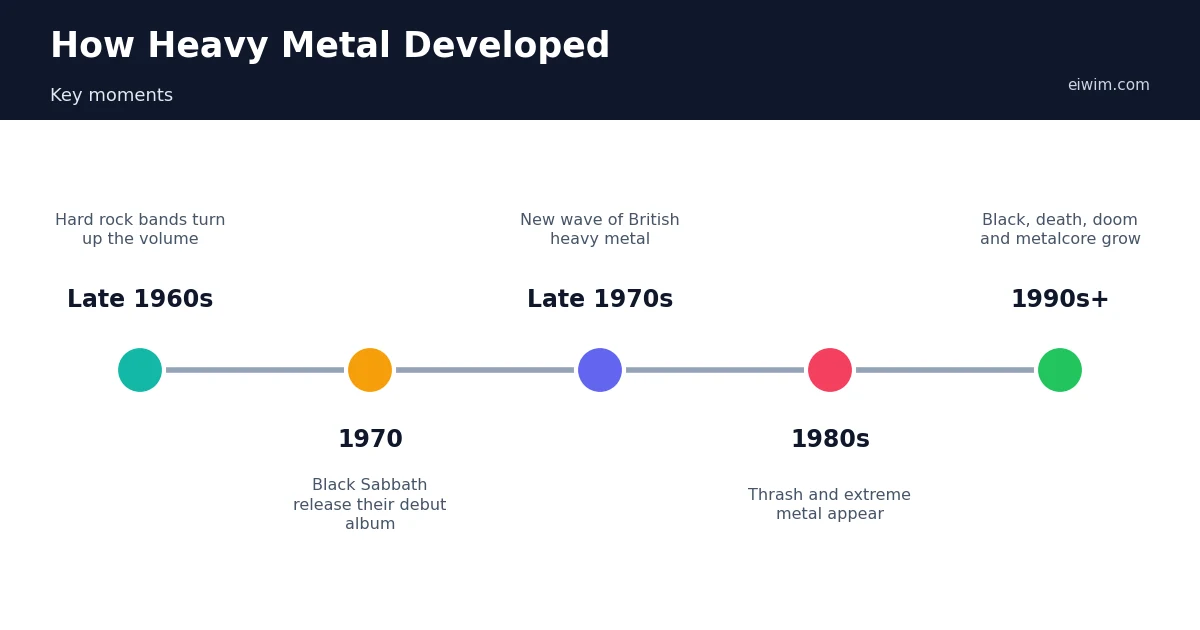
In the late 1960s, bands in the UK and the US began to play blues-based rock louder and heavier, with distorted guitars, strong riffs and powerful vocals. This hard rock sound was already popular in the early 1970s, and it remains a foundation for rock and metal. If you prefer melodic songs with big choruses, start with Hard Rock and Classic Rock stations.
The birth of heavy metal
Heavy metal as a distinct style is often traced to Black Sabbath, whose self-titled debut album appeared in 1970. Their slow, dark, riff-driven sound, using heavy downtuned guitars, shaped what many people mean by metal. Other bands, including Led Zeppelin and Deep Purple, helped define the heavier side of hard rock at the same time. In the late 1970s, a wave of British bands brought faster tempos and more complex guitar playing, in what is often called the New Wave of British Heavy Metal.
The main subgenres
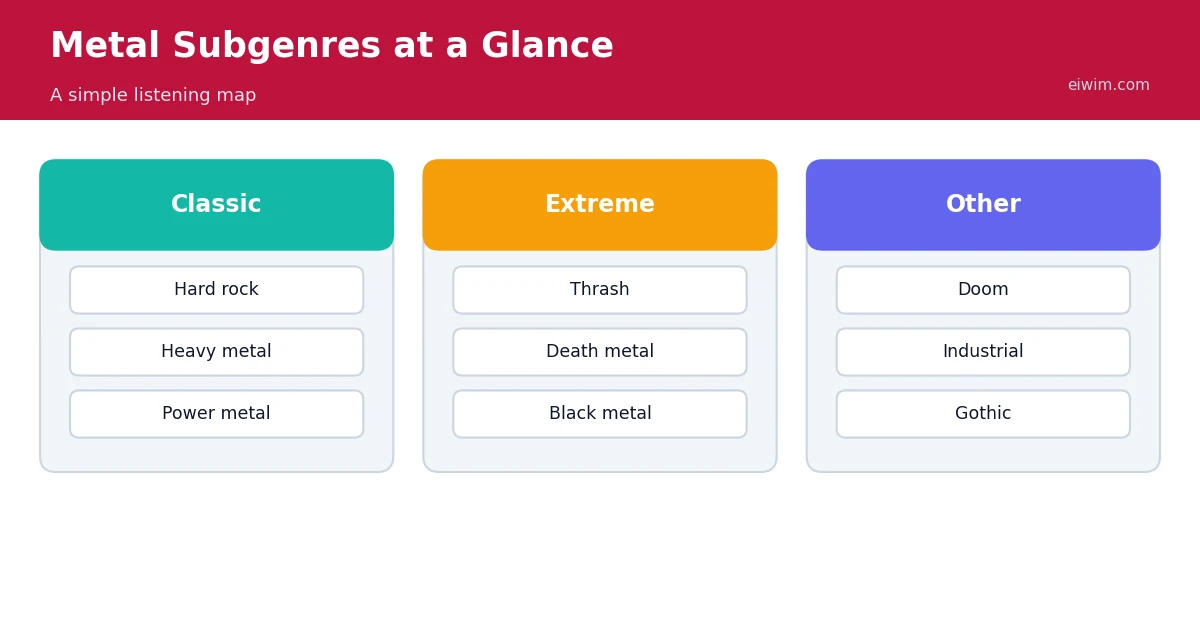
- Heavy metal. The classic style, with soaring vocals, twin guitars and powerful drums.
- Power metal. Fast, melodic and dramatic, often with fantasy themes and high-pitched vocals.
- Thrash metal. Developed in the early 1980s, it is very fast and aggressive, with sharp guitar riffs. Several American bands, often called the "Big Four" of thrash, became hugely influential.
- Death metal. Emerging in the late 1980s, it uses extremely low, growled vocals and complex, intense rhythms.
- Black metal. Known for fast tremolo guitar playing, high screamed vocals and a raw, atmospheric sound. The best-known scene developed in Norway in the early 1990s.
- Doom metal. Slow, heavy and often gloomy, building on the sound of early Black Sabbath.
- Metalcore. A blend of metal and hardcore punk, often alternating between screamed verses and melodic choruses.
Related genres
Metal has many neighbours. Punk shares its energy and speed. Industrial uses harsh machine-like textures, and Gothic focuses on dark atmosphere. On Eiwim you can explore these alongside Metal to hear how the styles overlap.
Why metal radio works
Metal fans often care about discovering new bands, and radio is a good way to do that. Many stations run specialist shows with interviews, new releases and themed hours dedicated to a subgenre. Listening live also adds a sense of community, as presenters and fans share recommendations. Because the genre has a strong underground scene, online-only stations often play bands that would never be heard on mainstream radio.
How to find the right station
- Start with the Metal category for a general mix.
- If you want something lighter, try Hard Rock or Classic Rock.
- For extreme styles, look for stations that mention thrash, death or black metal in their name or description.
- Explore stations from different countries. Scandinavia, Germany, Brazil and the US all have notable scenes. Browse Germany or the USA to start.
Tips for newcomers
- Do not judge the genre by one song. A style that sounds harsh at first can reveal complexity after a few listens.
- Listen to a few melodic subgenres, such as power or classic metal, before trying extreme ones.
- Pay attention to the guitar riffs and drum patterns. They are often the most interesting parts of the music.
- Keep volume reasonable. Loud music for long periods can damage hearing, and metal is often best enjoyed with good sound rather than maximum volume.
Metal around the world
Metal has spread globally, and local scenes often mix the genre with regional traditions. In Finland you find folk metal, in Brazil thrash and extreme styles, in Japan visual and melodic styles, and in the Middle East and Africa, emerging local scenes. This variety means that every part of the world has its own metal story, and radio is one of the best ways to hear it.
Related reading
If you enjoy the guitar-driven side of music, read our guide to rock radio from classic rock to alternative. For the electronic, mechanical side, see electronic music genres explained.
What gives metal its sound
A few technical features help explain why metal sounds the way it does. Guitars are played through heavy distortion and often tuned lower than usual, which makes riffs sound thick and dark. Drummers frequently use two bass drums, or a double pedal, to play fast patterns. Vocals cover a wide range: clean singing, high screams, low growls and everything in between. Understanding these basics makes it easier to hear differences between subgenres. Thrash prioritises speed and sharp riffs, doom slows everything down, and power metal adds clean, soaring vocals.
How to read a metal station
Metal stations often describe their format with genre words in the name or tags. Names that mention classic, heritage or rock suggest older and more melodic music. Names that mention extreme, underground, thrash, death or black signal more aggressive styles. If you are unsure, listen for ten minutes and see whether the vocals and tempo suit you before committing to a station.
Festivals and live culture
Metal has a strong live culture. Large festivals, such as Wacken Open Air in Germany, which began in 1990, attract fans from around the world, and many radio stations broadcast festival coverage or interviews. Listening to a station in the weeks before a big festival is a good way to hear new bands. If you attend concerts, remember that loud music can damage hearing, so earplugs designed for music are a sensible precaution.
Frequently asked questions
What is the difference between hard rock and heavy metal?
Hard rock is usually more blues-based and melodic. Heavy metal is heavier, with darker themes, more distortion and more complex or aggressive playing.
What does "extreme metal" mean?
It is a broad term for the more aggressive subgenres, such as thrash, death and black metal.
Is metal always loud and aggressive?
No. Many styles are melodic, atmospheric or slow, and some metal stations focus on ballads and instrumental music.
Where can I find metal stations?
Try the Metal, Hard Rock and Classic Rock categories on the genres page, and look for specialist stations from different countries.
Discover more styles on the genres page.