Blues Radio: From the Mississippi Delta to Chicago and Beyond
October 09, 2026 · Updated November 02, 2026
The blues is one of the most important roots of modern popular music. Jazz, rock, soul, R&B and even hip hop all draw on it. Yet the blues is also a living style in its own right, with festivals, clubs and radio shows dedicated to it. If you have never listened to blues radio, this guide will help you understand what you are hearing and where to start.
Where the blues came from
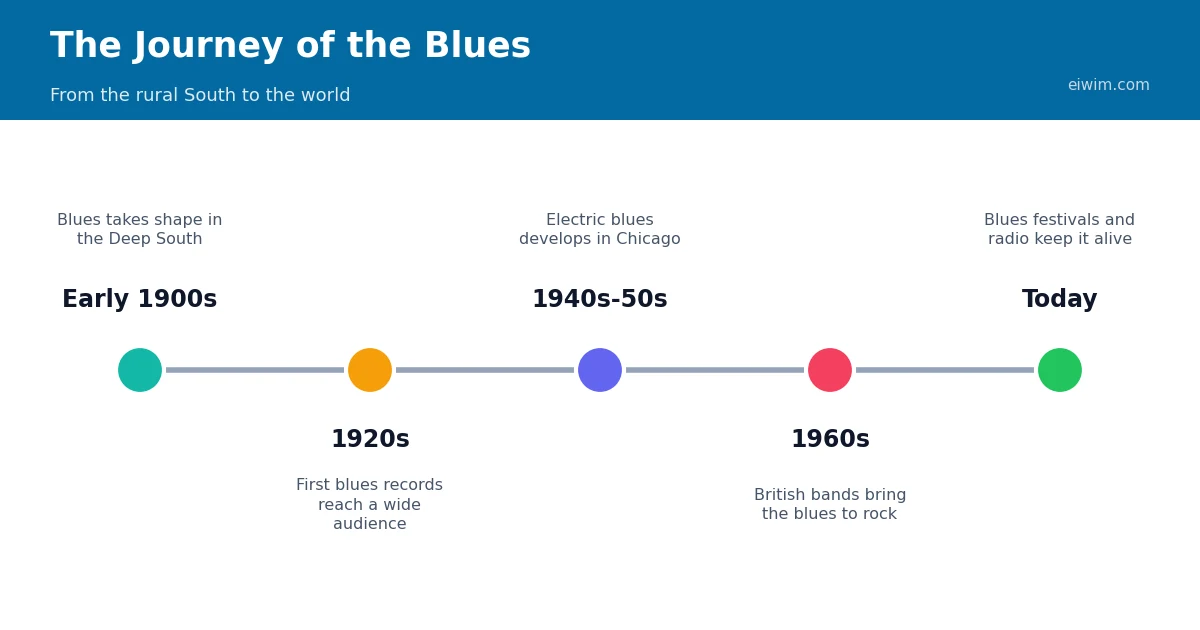
The blues developed in the late 19th and early 20th centuries among African-American communities in the American South. It grew out of work songs, spirituals and field hollers and was shaped by the difficult conditions in which many people lived. The Mississippi Delta, a region of fertile farmland, is often described as a birthplace of the style. Early blues was frequently performed by a single singer accompanying themselves on acoustic guitar, with raw emotion and inventive rhythms.
The sound of the blues
Many blues songs use a repeating pattern known as the twelve-bar blues. It is built on three chords and a standard sequence, which gives musicians a shared framework to improvise within. Blues players also use "blue notes", slightly bent or flattened notes that give the music a distinctive, expressive colour, and call-and-response patterns in which the voice sings a line and the instrument replies. Lyrics are often direct and personal, dealing with love, loss, work and survival, sometimes with humour.

From the Delta to the cities
In the early 20th century, large numbers of African Americans moved from the rural South to cities such as Memphis, St. Louis, Detroit and Chicago, in what is called the Great Migration. The blues travelled with them. In the cities, musicians added amplification, drums, bass and harmonica, creating a louder, more driving style. Chicago became especially famous for electric blues, and artists such as Muddy Waters and Howlin' Wolf became central figures in the 1950s.
Main styles to know
- Delta blues. Raw, mostly acoustic and solo, with strong slide guitar and emotional singing.
- Chicago blues. Electric, band-based and powerful, with amplified guitar and harmonica.
- Texas blues. Often more guitar-focused, with a swinging rhythm and flashy solos.
- Jump blues. Up-tempo, danceable blues with horns, a forerunner of rock 'n' roll.
- Blues rock. Blues played with rock energy, popular from the 1960s onward.
The blues and rock
In the 1960s, British musicians fell in love with American blues records and began playing them for new audiences. Bands in the UK and the US then built rock on the blues foundation, and many classic rock riffs trace back to blues patterns. Hearing the blues helps you understand where rock guitar playing comes from. Try both Blues and Classic Rock stations side by side to hear the link.
How to listen to blues radio
- Start with the Blues category on Eiwim.
- Listen for the guitar, harmonica and voice, and notice how they respond to each other.
- Pay attention to the lyrics. Many blues songs tell a small story in just a few lines.
- If you like the blues' emotional side, try related genres such as Soul, Gospel and Jazz.
The blues around the world
The blues is not only an American form. Countries including the UK, Germany, France, Canada, Australia and Brazil have active blues scenes, with local musicians adding their own influences. Many blues stations are online-only and run by enthusiasts, so you can find rare recordings and live concerts that mainstream radio rarely plays. Browse the countries page to find stations from around the world.
Is the blues sad music?
It can sound that way, but fans often describe it as the opposite. Many people feel that singing about hardship honestly makes it easier to bear, and plenty of blues songs are playful, funny or celebratory. The music works as release and as storytelling, which explains why it has lasted for more than a century.
Related reading
To follow the family tree further, read our guide to jazz radio and its styles, our post on soul, Motown and R&B and the article on gospel and Christian radio.
A starter listening journey
If you want to explore the blues beyond radio, a few names give you a map. Bessie Smith was one of the great blues singers of the 1920s, and her recordings show how powerful the early style could be. Robert Johnson's recordings from the 1930s are among the best-known examples of Delta blues, with intense guitar playing and haunting vocals. Muddy Waters and Howlin' Wolf represent the electric Chicago sound of the 1950s. B.B. King became one of the most recognisable guitarists in the world, known for expressive single-note solos, and John Lee Hooker made hypnotic, rhythmic blues with a deep voice. You do not need to memorise these names. Simply note when a presenter mentions one and follow the thread.
Instruments to listen for
The guitar is central to the blues, and many players use a slide, made from glass or metal, to glide between notes in a voice-like way. The harmonica, sometimes called the blues harp, adds a wailing, vocal quality. Piano, upright or electric bass and drums complete the typical band. In a solo, notice how players leave space. Blues soloists often play a simple phrase, pause and then answer themselves, which is a big part of the music's emotional impact.
Why live blues programmes are special
Many blues stations broadcast live recordings, because the music is meant to be heard in a room with an audience. These performances often include stories between songs and long solos that would not fit on a short studio recording. If you enjoy live music, look for stations that mention concerts, jam sessions or festival recordings in their descriptions.
Frequently asked questions
What is the 12-bar blues?
It is a common structure with twelve bars of music and three main chords that repeats throughout a song.
Who invented the blues?
No single person did. It developed gradually in African-American communities in the South in the late 19th and early 20th centuries.
What is a blue note?
A note played or sung slightly lower than the standard scale, giving the music a mournful, expressive quality.
Is blues the same as jazz?
No, but they are close relatives. Both grew from African-American music and share improvisation, but the blues is usually simpler in structure and more directly emotional.
Explore more roots-based music on the genres page.