
How Radio Stations Make Money: Ads, Sponsors, Donations and Public Funding
October 27, 2026 · Updated November 02, 2026
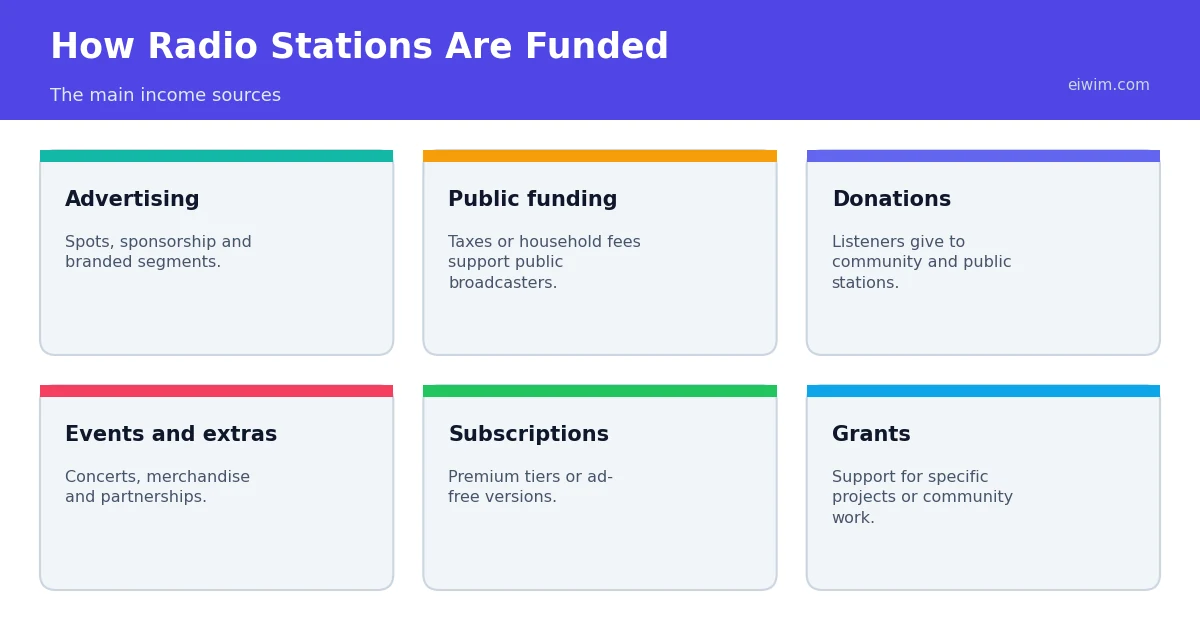
Radio sounds simple, but running a station takes real money. Presenters, studios, equipment, music licences, transmitters or streaming servers, and promotion all have costs. Understanding where the money comes from helps explain why stations sound the way they do, why ads appear in some streams and why some stations ask for donations. This guide explains the main models, using plain language.
What does a station spend money on?
- Staff. Presenters, producers, journalists, sales teams and technical staff.
- Music rights. Stations pay royalties to the people who write and record music. In many countries this is done through collecting societies that license music on behalf of artists and publishers.
- Technology. Studios, microphones, software, transmitters for FM or DAB, and servers or content delivery for online streams.
- Premises and utilities. Buildings, electricity and internet connectivity.
- Marketing. Promotions, events and advertising.
Online-only stations avoid some of these costs, such as transmitter fees, but they still pay for streaming, rights and sometimes staff. That is why even small internet stations need a plan to cover their expenses.
Commercial radio and advertising
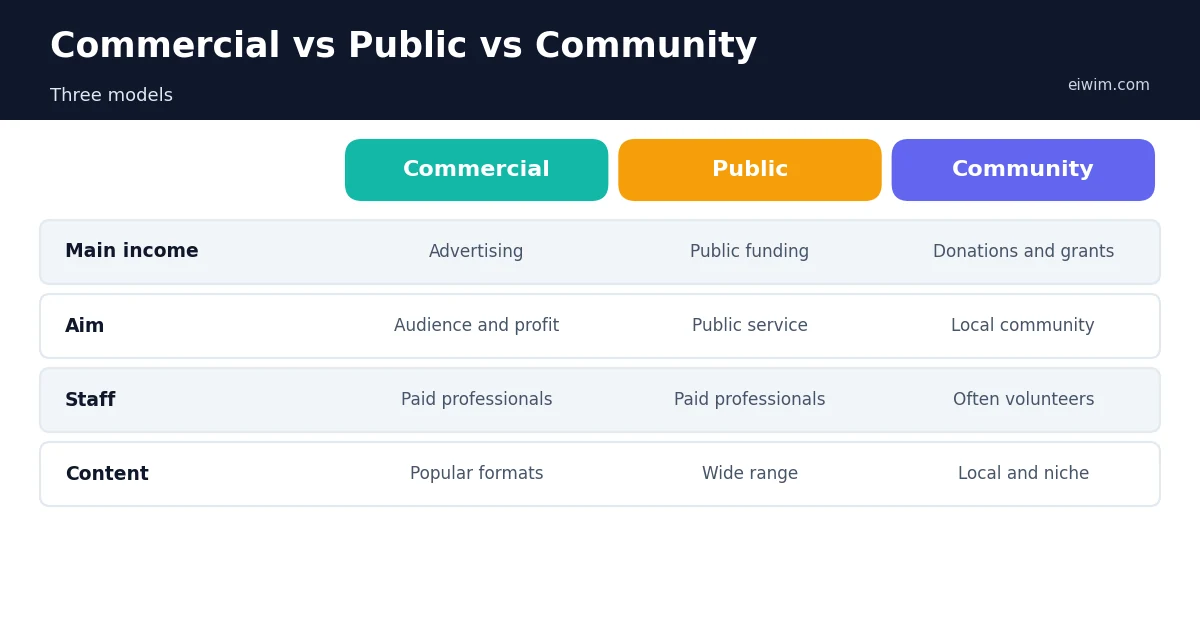
Most commercial stations earn money by selling advertising. Advertisers pay to have short messages, called spots, played between songs or programmes. The price depends on how many people listen, which time of day the spot runs and the station's audience. Stations also sell sponsorship, where a business pays to be associated with a programme, a weather report or a traffic bulletin. Because advertising income depends on audience size, commercial stations often choose popular formats such as Pop, Hits and Top 40 & Charts. Our guide to how charts shape playlists explains why.
Public service broadcasting
Public broadcasters are funded in part or in whole by the public. In some countries this comes from general taxation, and in others from a dedicated fee. For example, the BBC in the UK is funded largely by a licence fee paid by households that watch or record live television, and in Germany public broadcasters are supported by a household contribution. Public broadcasters are usually required to provide a wide range of programming, including news, culture, education and minority-interest content, and to be impartial. That is why they often carry more speech, documentaries and classical music than commercial stations.
Community radio
Community stations serve a local area or a specific group, such as a language community, students or a cultural association. They are often run by volunteers and funded by a mix of donations, local advertising, grants and fundraising events. They can broadcast content that larger stations ignore, from local news to minority-language programmes and niche music. If you enjoy discovering unusual music and local voices, community stations are worth exploring.
Listener donations and pledge drives
Many public and community stations in the United States and elsewhere rely heavily on listener donations. During pledge drives, presenters ask listeners to contribute, sometimes offering gifts or thanks. Because the audience pays directly, these stations may feel freer to broadcast programmes that do not attract mass advertising, such as Jazz, Classical and Folk.
How online radio earns money
Online stations use similar models. Some insert audio ads into their streams. Others display banner ads on their websites or in apps. Some offer subscriptions that remove ads or provide extra channels, and many accept donations. Directories like Eiwim do not control these decisions. A station chooses how it funds itself and what ads it includes. If you notice an ad at the start of a stream, it is usually part of the station's own funding.
Why you hear what you hear
Funding shapes content. A commercial station that earns money from ads tends to play music with broad appeal, repeat popular songs and run frequent breaks for advertising. A public broadcaster may broadcast longer programmes and more speech. A community station may play music chosen by volunteers, with a strong local flavour. None of these models is automatically better, but understanding them helps you choose stations that match what you want. If you want less advertising, look for public or community stations. If you want chart music, commercial stations are the best fit.
How you can support stations you love
- Listen regularly. Audience size matters to advertisers and funders.
- Donate if the station accepts support, especially community and public stations.
- Tell friends about stations you enjoy.
- Use the station's official website for requests, sponsored events or merchandise.
- Be patient with ads. They are what pay for the free programmes.
Related reading
For the history of the medium, read a short history of radio.
Music licensing in practice
Music licensing is one of the biggest costs for many stations. In most countries, collecting societies license music on behalf of songwriters, composers and publishers. In the United States, organisations such as ASCAP and BMI license public performance of music, in the UK PRS for Music does the same, and in Germany GEMA plays that role. Separate arrangements often cover the sound recordings themselves. The rules differ by country and by whether a station broadcasts over the air or online, which is why station owners should always check local requirements before they start.
What advertising breaks tell you
Advertising breaks can tell you something about a station's audience. Local businesses, such as shops and restaurants, suggest a community-focused station. National brands suggest a large audience. Public service announcements or sponsorship messages from charities may suggest a non-profit or community station. Stations also place advertising at times when the most people are listening, which is why breaks tend to be more frequent during morning and evening commute hours.
The cost of going online
Streaming costs scale with the number of listeners. A small station with a few dozen listeners can run on a modest server, but a station with thousands of simultaneous listeners needs more bandwidth, and that costs more. This is one reason many stations use lower bitrates for speech and higher ones for music, and why some offer extra premium streams at higher quality. Understanding these costs helps explain why some online stations carry more advertising than traditional broadcasters.
Frequently asked questions
Why do some online streams have ads?
Ads help the station pay for streaming, music rights and staff. Some stations insert audio ads and others show banners on their websites.
Is community radio free to listen to?
Yes. Community stations are free to listen to, and they often ask listeners for donations to keep going.
Who pays for public radio?
It depends on the country. Funding may come from taxes, household fees, donations or a combination.
Do stations pay for the music they play?
Yes. Most stations pay licence fees or royalties to the organisations that represent songwriters, performers and record labels.
Explore different types of stations on the genres page.