
Sports Radio: How to Follow Live Commentary and Talk Online
October 24, 2026 · Updated November 02, 2026
Many fans say that radio is the best way to experience a game when you cannot watch it. A good commentator paints a picture with words, adds atmosphere and keeps you informed while you do something else. Sports radio also includes talk shows, analysis and call-ins that keep conversations going between games. Online radio makes all this available from anywhere. This guide explains how sports radio works and how to follow it.
Why radio commentary is still popular
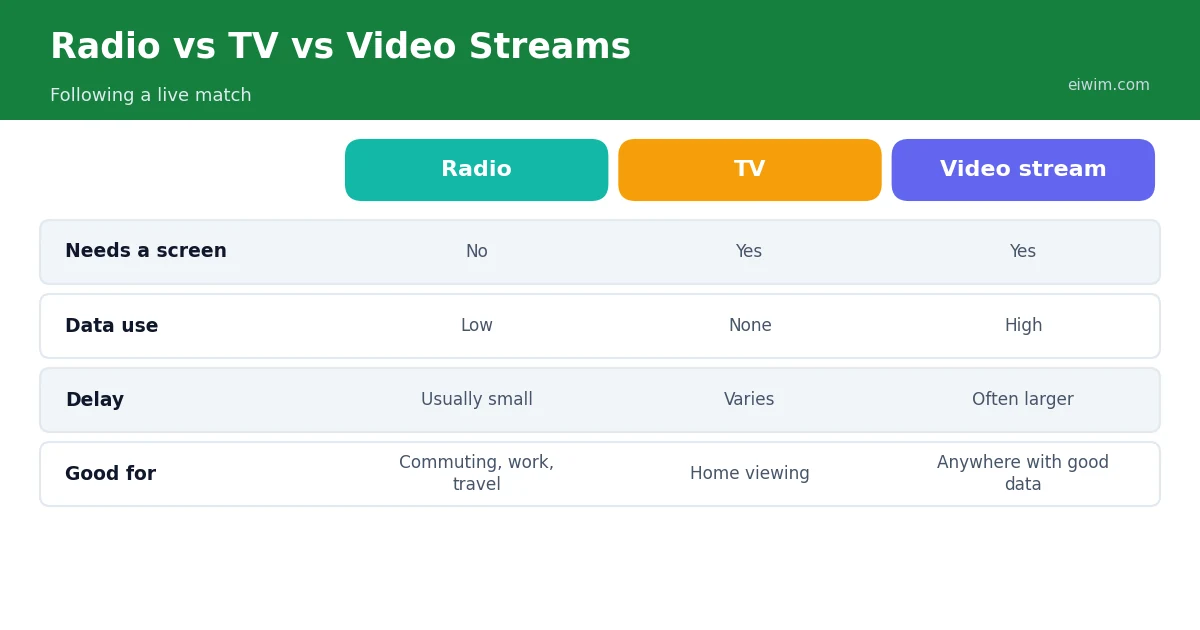
Radio has several advantages over television. You do not need to look at a screen, so you can follow a match while driving, working, cooking or walking. The data requirement is small compared with video, which is useful on a mobile connection. And a skilled commentator can make an ordinary match sound exciting, because radio commentary must describe everything the listener cannot see. Many fans grew up listening to games with their families and feel an emotional link to a particular voice.
How a broadcast is produced
A live sports radio broadcast usually has a play-by-play commentator, who describes the action as it happens, and a colour or analyst commentator, who adds background and opinion. Producers organise the show, and reporters on the ground may add interviews and updates. Before and after the game, studio hosts discuss preparation and results. The production is similar for football, cricket, baseball, basketball, motor racing and other sports, though the style of commentary varies by sport and culture.
Rights and where you can listen
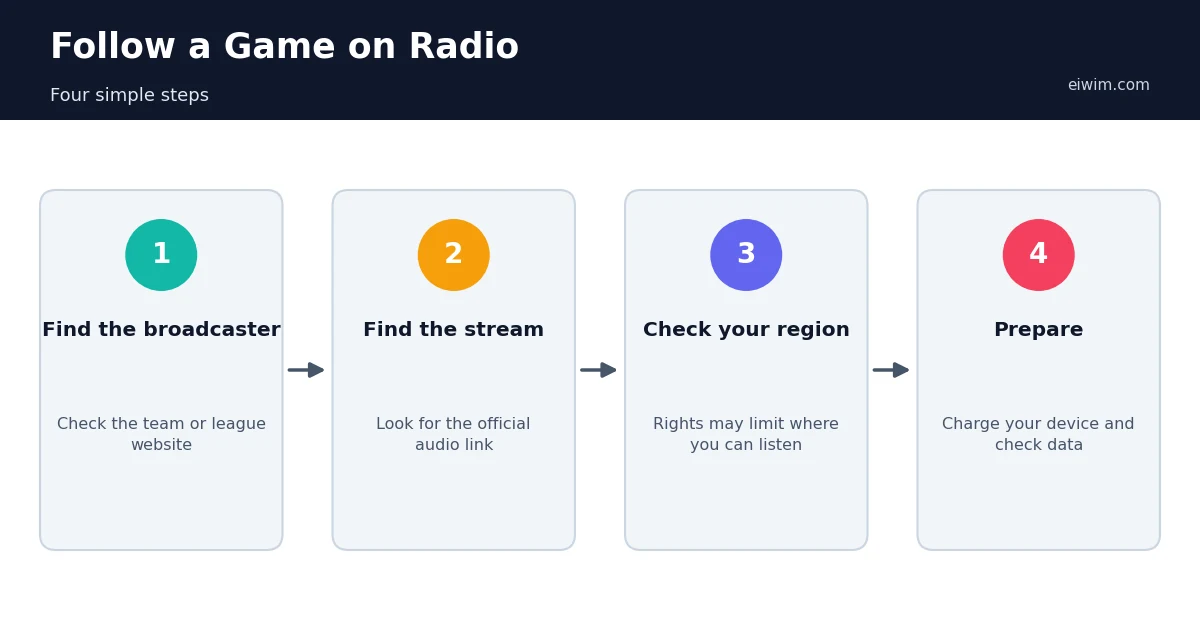
Broadcasting live sports involves rights that are bought and sold, and these may limit where a station can stream. A radio station might have the right to broadcast a game across one country but not abroad, so the online stream may be blocked outside that area. If you cannot find a stream, check the official website of the team, the league or the broadcaster to see what is available in your region. Using unofficial streams is risky and may be unlawful, so it is better to use official sources.
Radio versus television delay
Radio and television do not always match. Television and video streams often have a delay of several seconds or more because of the way the signal is processed, while radio is usually faster. If you follow a game by radio and check scores on your phone, you may find that your phone reveals things before the commentator says them, or the other way round. Many fans solve this by choosing one source and sticking with it.
Beyond live commentary
Sports radio is not only about live games. Many stations run talk shows where hosts and callers debate results, trades, tactics and rumours. Some stations broadcast pre-game and post-game shows, interviews with players and coaches, and highlights. These are especially useful if you enjoy discussing the sport as much as watching it. For general talk programming, you can also explore Talk and News-Talk stations, which often include sports segments.
Language learning with sports commentary
Commentary is a good way to practise a language because the vocabulary is repetitive and tied to action. Words for passes, goals, fouls, runs, wickets and scores appear again and again. If you want to learn Spanish, German, French or Portuguese, listening to commentary from a sport you know well helps you guess meaning from the context. Our guide to learning a language with online radio has more suggestions.
Practical tips
- Check the schedule. Kick-off times are in local time, so confirm the time in your own time zone.
- Plan your data. A 64 kbps stream uses about 28.8 MB per hour, which is enough for speech. See bitrate and stream quality.
- Keep your device charged. A match can last several hours.
- Have a backup. Know a second station or a second device in case of a problem. Our guide to fixing streams that will not play can help.
- Use headphones or a speaker you like. Long sessions are more enjoyable with comfortable equipment.
Finding sports content on Eiwim
Because radio directories are organised mainly by genre, country and language, the best way to find sports content is to start with talk stations and then look at each station's description. Browse the countries page to find broadcasters in places that follow your favourite sports. Many team and league broadcasts are carried by general stations rather than dedicated sports stations, so the match you want may appear only on certain days.
A match-day routine
A little preparation makes listening to a live game more enjoyable. About thirty minutes before kick-off, open the stream and check that it plays properly, so that you have time to fix any problems. Charge your device or plug it in, and decide whether you will use headphones or a speaker. If you have a team sheet, line-up or schedule, keep it nearby to follow the names. During the match, many fans keep a second source open for scores, but be aware of delays between sources. Afterwards, stay tuned for the post-match show, which often includes interviews and analysis.
Different sports, different commentary
Each sport has its own commentary style. Football commentary is fast and focused on moments of action, while cricket commentary, especially for long matches, can be relaxed and conversational, with plenty of stories between balls. Motor racing commentary tracks positions and strategy, and baseball commentary fills quiet moments with statistics and history. Hearing the same sport commented in different countries can show how each culture talks about it, which is both enjoyable and a good way to learn language.
Frequently asked questions
Can I listen to sports radio from another country?
Often yes, but rights can restrict some broadcasts to certain regions. Check the official source for your area.
Does sports radio use a lot of data?
No. A low-bitrate stream uses about 28.8 MB per hour, much less than video.
Why is radio faster than TV?
Radio does not require as much processing as video, so the delay between the event and the broadcast is often smaller.
Are there free sports stations?
Many stations stream their commentary free of charge, though some leagues and broadcasters require subscriptions.
For other types of spoken radio, see news and talk radio.